The place for your
next tattoo and piercing

150,000+ tattoos and piercings

Walk-in small tattoos
and piercings!

You can book a larger tattoo
on our Instagram or here.

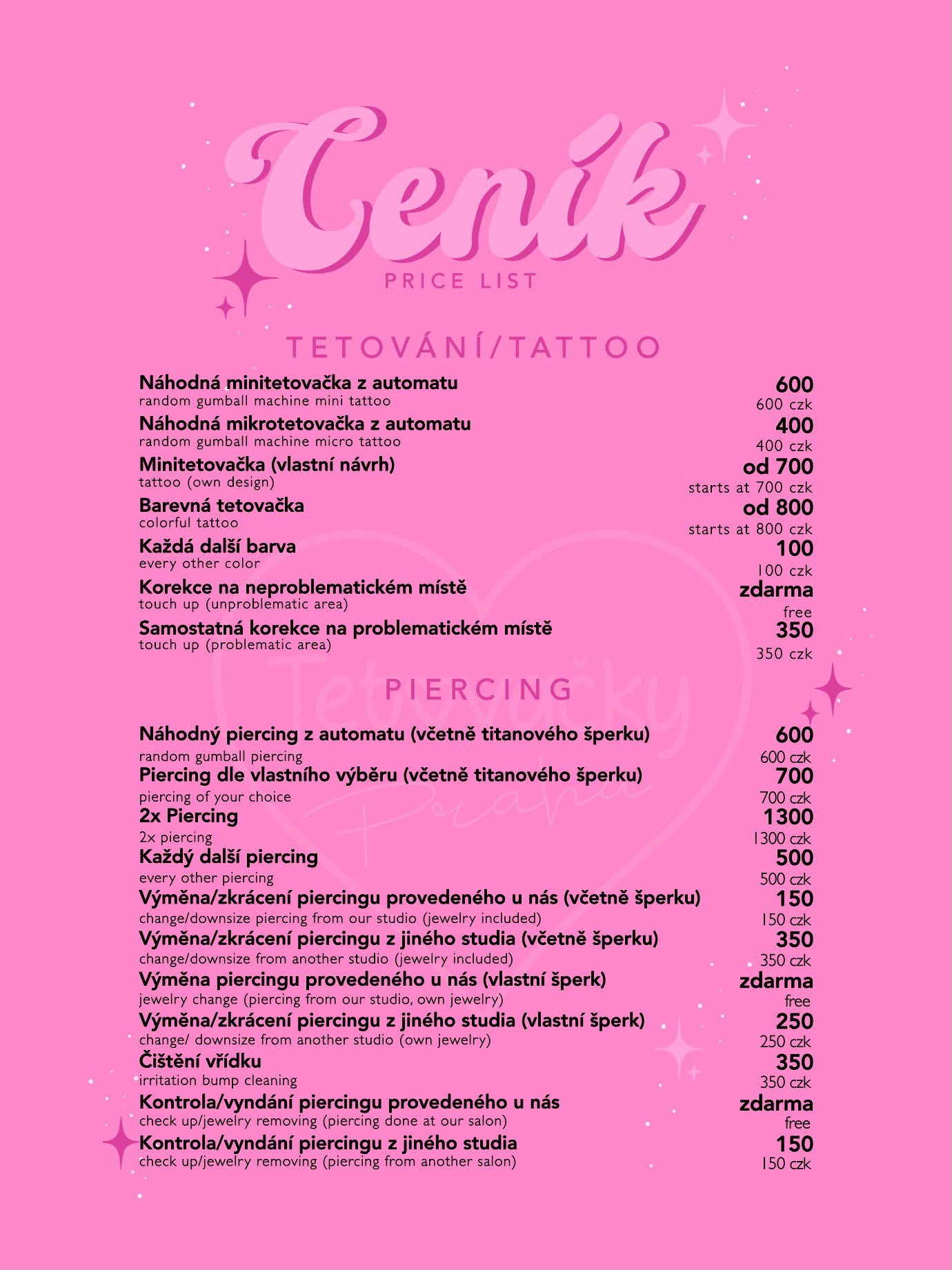
Price list

Prices in CZK

  • Random mini tattoo from the gumball machine 600CZK
  • Mini tattoo (your own design) from700CZK
  • Color tattoo from800CZK
  • Large tattoo by appointmentprice depends on the size and design from1,500CZK
  • Weekend appointment surchargefor tattoos by appointment +20%
  • Random piercing from the gumball machine (incl. titanium jewelry) 600CZK
  • Piercing of your choice (incl. titanium jewelry) 700CZK

About us

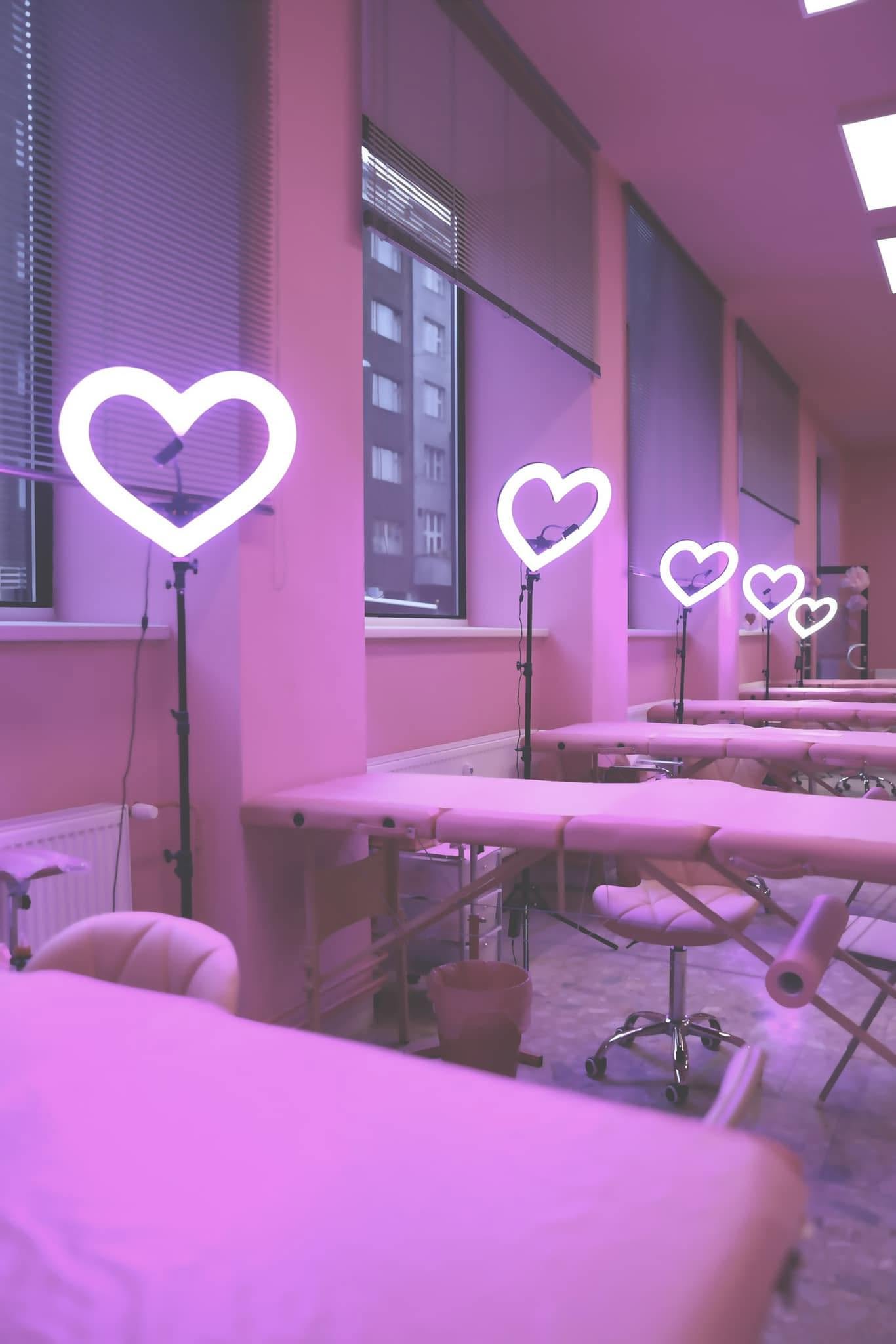
We are a professional tattoo and piercing studio right in the center of Prague. Tetovačky Praha is known for its unique pink interior, a friendly atmosphere and, above all, quality work at very reasonable prices. We care about every customer feeling comfortable and safe with us and leaving completely satisfied.

We specialize in a wide range of tattoo styles — from small minimalist designs to larger, detailed tattoos. Smaller tattoos can be done walk-in, without an appointment; for larger projects you can book a specific date.

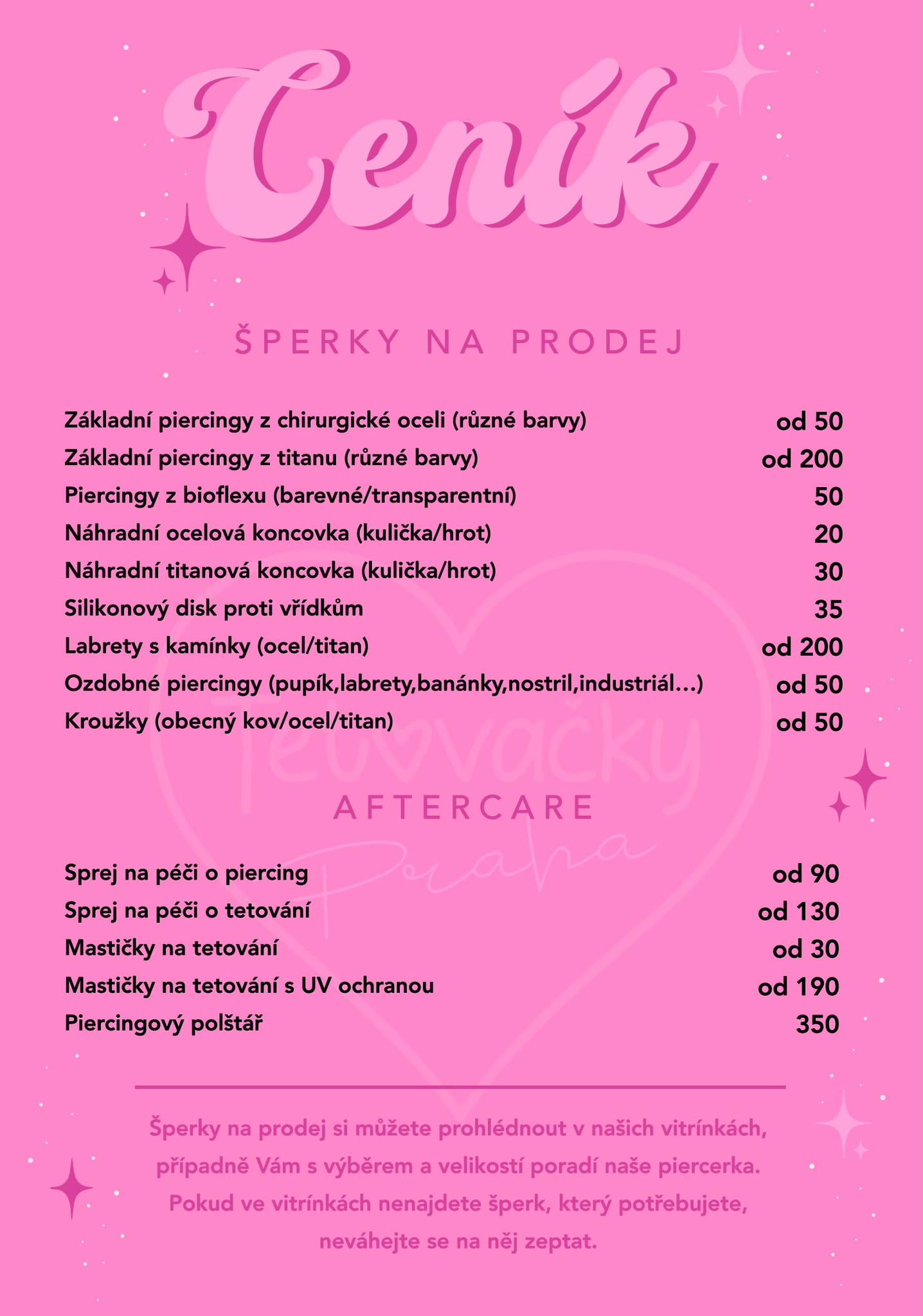
Our studio also offers a complete piercing service. We do many kinds of piercings and only use titanium jewelry suitable for fresh piercings. You’ll also find a large selection of piercing jewelry to buy, as well as professional aftercare products to look after your new tattoo or piercing properly.

We take hygiene, safety and a professional approach very seriously. Our team is made up of experienced, certified tattoo artists and piercers, each with hundreds to thousands of procedures behind them. We use sterile single-use tools and follow strict hygiene standards.

Whether you’re coming for your first tattoo, a new piercing or just for inspiration, we’ll be happy to welcome you.

Our first studio opened in 2017, and we’ve now done more than 150,000 tattoos and piercings 💗.

Inside the Tetovačky Praha studio

Our services

Custom tattoos

An original design drawn just for you.

Piercing

Ears, nose, navel and more — walk-ins welcome.

Fine line

Delicate lines, minimalism and elegance.

Cover-up

Covering or reworking an old tattoo.

Black & Grey

Realistic designs in shades of grey.

Color tattoos

Vivid colors, Japanese style, new school.

Hygiene, sterility and safety

Following strict hygiene standards goes without saying for us. We mainly use sterile, single-use tools and keep everything spotlessly clean, so that every procedure is safe and professional.

Quality tattoo inks

In our studio we only use proven, quality tattoo inks, mainly from Dynamic Ink, which are safe for your skin and help your tattoo last. We also have lots of color shades for you to choose from.

Happy customers

Every customer’s satisfaction is our priority. We aim for a pleasant atmosphere, a professional approach and a result you’ll be happy with for many years. We’ll gladly advise you on the best placement for both tattoos and piercings.

Photo gallery

A look at what we create — from small walk-in tattoos to larger designs, piercings and a peek inside the studio.

Walk-in tattoos

Larger tattoos by appointment

Piercings

Inside the studio

Good to know

What you should know before visiting the studio.

Small tattoos without an appointment

For small tattoos and piercings, come in any time during opening hours — no booking needed. We recommend coming early, as capacity is limited.

Large tattoos — booking

Book larger designs in advance via Instagram or the form below. When booking, we’ll agree on the design and the date.

Before your tattoo

Get a good night’s sleep, eat well and stay hydrated. Don’t drink alcohol for at least 24 hours beforehand. Wear comfortable clothes.

Tattoo aftercare

After your tattoo, you’ll get detailed healing instructions. Avoid pools, the sea and saunas until it has fully healed, and protect the tattoo from direct sunlight.

Age limit

We do tattoos and selected piercings from the age of 14 – with a parent or legal guardian present or with their written consent. Some procedures, such as nipple piercings or face tattoos, only from 18.

Payment

On weekdays you can pay by cash or card; on Saturdays we only accept cash. For larger tattoos, we take a deposit when you book your appointment.

Frequently asked questions

Visiting the studio

13 questions

Small tattoos and piercings are walk-in – just come in any time during opening hours. For larger or more complex tattoos, please book an appointment with us in advance.

We’re open Monday to Thursday from 12:00 to 18:00 and on Friday and Saturday from 12:00 to 17:00. We’re closed on Sundays.

Monday to Thursday you can come in until 18:00, on Friday and Saturday until 17:00. If you’re planning several tattoos or a more complex design, we recommend coming earlier.

Usually yes, except over Christmas and on 1 January. We always post our current opening hours on our Instagram.

It depends on how many customers there are and how complex their tattoos are. We regularly post the approximate current waiting time in our Instagram stories. Please treat it as a guide only – it can change during the day.

On weekdays you can pay by cash or card. On Saturdays we only accept cash.

Yes, you can have both done on the same day. Just tell us at reception which services you’re interested in.

Yes. At the studio you can buy tattoo and piercing aftercare, piercing jewelry and a piercing pillow. We’ll be happy to help you choose.

There is step-free access to the studio. The toilet, however, is not adapted for wheelchair users.

Yes, you can bring one person along for company. If the others are getting a tattoo or piercing too, you can come in a group of any size – we don’t limit the number of customers in a group.

You get one stamp for every visit where you get a new tattoo or piercing worth at least 700 CZK. Once you’ve collected 10 stamps, you get a tattoo or piercing worth 700 CZK for free on your next visit.

Children under 12 are not allowed in the studio, not even as companions. Please arrange childcare for the time of your visit.

Dogs and other animals are not allowed in our studio. Thank you for respecting this rule.

Age and parental consent

5 questions

We do tattoos and selected piercings from the age of 14, with a parent or legal guardian present or with their written consent. Some procedures have a higher age limit – for example, we only do nipple piercings from 18.

You can download the tattoo and piercing consent forms here. Bring the form with you filled in and signed by your parent or legal guardian.

Only if they are also your legal guardian. Simply being an adult is not enough.

Yes. You need consent again for every new tattoo or piercing, even if you’ve been to us before.

We don’t require new consent for a touch-up of a tattoo we did, or for changing or downsizing piercing jewelry.

Tattoos

19 questions

Tattoos of your own design start at 700 CZK, color tattoos at 800 CZK. A random micro tattoo from the gumball machine costs 400 CZK and a random mini tattoo 600 CZK. The final price depends on the size, complexity and placement of the design.

For small tattoos, we’ll tell you the price at the studio once we’ve looked at the design, size and placement – before we start tattooing. For tattoos by appointment, we agree on the price when booking.

Yes. Bring a picture, lettering or any other reference. We’ll talk through together how the design will work as a tattoo.

Yes, there’s no need to print the design. Ideally, bring a sharp image in the best possible quality.

Yes. It can be your own design, a child’s drawing or a handwritten note, for example. We’ll check on the spot whether the size or some details need adjusting.

For small walk-in tattoos, we work from the reference you bring. We’ll gladly help you adjust it and choose the lettering, size and placement. Custom designs for larger tattoos are prepared in advance as part of booking.

Yes. You can bring your own reference or pick a font at the studio. We’ll also advise you on the size so that the picture or lettering stays legible and suitable for tattooing.

Yes. We’ll agree on the design together first and you’ll check the placement on your body. If you’d like to change anything, tell us before we start tattooing.

Yes, if the studio’s current capacity allows.

Yes. Color tattoos start at 800 CZK, and each additional color costs an extra 100 CZK.

Yes, depending on the condition and quality of the original tattoo. Prices start at 700 CZK. It’s best to send us a sharp photo in advance and tell us what you’d like to change.

Yes, but we need to assess the options in advance. Send us a photo of the original tattoo, its approximate size and your idea for the new design.

For example fingers, wrists, ears, the face, feet, ankles, the inner lip, elbows or knees. In some places the pigment may hold less evenly and a touch-up may be needed. We’ll discuss with you in advance whether the design and placement are suitable.

A touch-up in a non-problematic area is free. A separate touch-up in a problematic area costs 350 CZK.

We recommend waiting until you’ve finished breastfeeding. The safety of a new tattoo or piercing during breastfeeding hasn’t been sufficiently researched, and the procedure also carries a risk of infection or an allergic reaction.

No. We only do face tattoos from the age of 18.

There’s no time limit for touch-ups of our tattoos. The tattoo must be healed before the touch-up. A touch-up in a non-problematic area is free; a separate touch-up in a problematic area costs 350 CZK.

We use certified tattoo inks, mainly from Dynamic Ink, Kuro Sumi and World Famous. We also have a range of color shades to choose from. We’ll discuss the specific options with you based on your chosen design.

The final shade may differ. It’s affected by your natural skin tone and undertone, your skin’s properties and how it heals. The pigment sits under the surface of the skin, so it can look slightly different on every person. A fresh tattoo also tends to look more vivid than a healed one. A photo or an image on a screen is therefore only a guide, not a guarantee of the exact shade.

Booking a larger tattoo

6 questions

Message us on Instagram @tetovacky_praha or on our WhatsApp. Send us a reference or a description of your idea, the approximate size in centimeters, the placement on your body and a date that would suit you.

Yes. Describe your idea and attach pictures for inspiration. We’ll agree on the details of the design with you in advance.

Prices start at around 1,500 CZK. The final price depends on the size and complexity of the design.

Yes. Your appointment is only confirmed once you’ve paid the deposit, which we then deduct from the total price of the tattoo. We’ll let you know the amount and terms when we arrange the booking.

If you need to change your appointment, let us know at least 48 hours in advance.

Yes, for a pre-booked weekend appointment for a larger tattoo we charge a 20% surcharge on the price of the tattoo.

Piercing

12 questions

A piercing of your choice costs 700 CZK, including basic titanium jewelry. Two piercings cost 1,300 CZK and each additional one 500 CZK. A random piercing from the gumball machine costs 600 CZK. All prices include jewelry.

No. We pierce with a sterile single-use needle.

We do ear piercings such as lobes, helixes, conch, tragus, flat, rook, daith or industrial. We also offer nostril, septum, eyebrow, selected lip piercings, smiley, navel and nipple piercings. Whether a specific piercing is possible always depends on suitable anatomy too.

We don’t do, for example, genital piercings, microdermals, surface piercings, cheeks, ashley, tongue, bridge or extreme piercings.

Yes. Not every anatomy is suitable for every piercing. Our piercer will check the area first and suggest an alternative if needed.

The price of the piercing includes basic titanium jewelry. Its shape and size are chosen by our piercer according to the placement, your anatomy and the room needed for initial swelling. For some piercings you can choose jewelry with stones or decoration.

We don’t use customers’ own jewelry for new piercings. We need to be sure the jewelry is made of a suitable material, has the right dimensions and finish, and is sterile.

Yes, but we’ll assess the right number individually. We take into account their placement as well as any other piercings that are still healing. For ear piercings, also think about which side you’ll be able to sleep on.

It depends on the type of piercing. For many placements we start with a different jewelry shape and only fit a ring once the piercing has healed. Our piercer will recommend the right option.

Yes, at the studio we have basic and decorative jewelry in various styles. We’ll help you choose the right material, size and design.

Yes. We’ll first check the condition of the piercing and whether the new jewelry is suitable. You’ll find prices for jewelry changes, downsizing and check-ups in our price list.

Once the initial swelling goes down, the original jewelry may be too long. Downsizing means replacing it with a better-fitting length. Our piercer will decide on the right time during a check-up; it doesn’t mean the piercing is already healed.

Gumball machines and random tattoos

7 questions

You choose a machine category and get a random design. It’s an option for everyone who loves surprises and likes to leave the choice to chance.

We offer micro tattoos, cute mini tattoos, designs for the brave, matching tattoos, Prague and Czech designs and random piercings.

A micro tattoo costs 400 CZK, a mini tattoo 600 CZK and a pair of matching tattoos 1,200 CZK.

Micro tattoos are up to about 1.5 cm. Mini tattoos and matching designs are usually up to 4 cm.

One try is included in the price. If you want to try again, each extra try costs 100 CZK.

For 600 CZK you get a random piercing. The price includes the piercing itself and basic titanium jewelry. Before the procedure, we check that your anatomy is suitable.

In that case, you can try again for free.

Gift vouchers

4 questions

Yes, we offer vouchers worth 500, 600, 700 and 1,000 CZK.

For tattoos, piercings, piercing jewelry and aftercare products.

Directly at the studio. By arrangement, we can also send it to you by post.

Vouchers are valid for 12 months from purchase.

Preparing for your visit

13 questions

Come well rested, having eaten and with plenty to drink. Wear clean, comfortable clothes that give access to the chosen area and won’t irritate it unnecessarily afterwards.

Tell us beforehand. If you start feeling unwell during the procedure, let us know straight away. You don’t have to grit your teeth through anything or feel embarrassed about asking for a break.

Everyone perceives pain differently, and it also depends on the placement. With piercings, the needle itself is quick; with tattoos, it also depends on the size and length of the work. Keep telling us how you feel.

Please come sober, not under the influence of alcohol or other drugs. Avoid alcohol for at least 24 hours before and after the procedure.

Let us know in advance. With some conditions and medications, you’ll need to discuss whether the procedure is suitable with your doctor. Never stop taking prescribed medication because of a tattoo or piercing.

If you’re ill, have a fever, or the skin in the area is irritated, injured or sunburned. If in doubt, message us before your visit.

We don’t tattoo over moles. If you have eczema or another skin condition, contact us in advance; if the area is actively irritated, postpone the procedure and consult a dermatologist about whether it’s suitable.

You don’t have to. We can prepare the area at the studio. What matters is that the skin isn’t irritated or cut.

In the days before, look after it as usual and keep it hydrated. On the day of your visit, come with clean skin and no freshly applied cream on the tattoo area.

Always agree on using it with us in advance. Don’t apply it without consulting us, as it can affect the condition of your skin and how the tattoo or piercing goes.

If you feel well, your period alone doesn’t have to be a reason to cancel your visit. If you have strong cramps, feel weak or nauseous, it’s better to choose another day.

Message us in advance and tell us which procedure you’re interested in. Also discuss whether it’s suitable and the timing with your doctor. We don’t do new piercings or tattoos on pregnant women.

A tattoo is usually no obstacle to an MRI scan. Tell the staff about it beforehand and report any burning or warming sensation immediately during the scan.

Tattoo aftercare

9 questions

Follow the instructions you get at the studio. Wash your hands before caring for it, clean the tattoo gently, don’t scrub it and don’t pick off peeling skin or scabs. Use the recommended aftercare.

It depends on the type of film used. You’ll get exact instructions after your tattoo.

If it exposes the tattoo, leaks, or water and dirt may be getting underneath, follow the instructions on the card you got from us, or contact us. Damaged covering may no longer protect the tattoo properly. Never put used film back on a cleaned tattoo. You can drop by any time and we’ll re-cover your tattoo with new film for free.

In the first days, a mix of tissue fluid, a small amount of blood and excess ink can build up under the film. If it leaks, the area is very irritated or your symptoms get worse, get in touch with us.

Yes, a short, gentle shower is better than a long soak. Also follow the instructions for the film used.

Once the tattoo has fully healed. The protective film alone doesn’t make swimming OK.

While it’s healing, protect it from direct sunlight, ideally with suitable clothing. Once healed, use high UV protection.

Plan your tattoo so it has enough time to heal fully before swimming and sunbathing. If you’re leaving soon, it’s usually more practical to get the tattoo after you’re back.

If pain, redness or swelling keep increasing, the area is very hot, pus appears or you have a fever, contact us immediately.

Piercing aftercare

16 questions

For external piercings, use a sterile saline wound wash with 0.9% sodium chloride and no other additives, or a piercing aftercare solution. For oral piercings, follow the special instructions from our piercer.

No. Don’t move or rotate the jewelry unnecessarily, not even while cleaning.

Don’t use them on a healing piercing unless a doctor recommends it. Also avoid homemade mixtures and cosmetics around the piercing.

Light-colored discharge that dries into crusties can be part of healing. Don’t force the crusties off. Thick pus and worsening pain or swelling need to be checked.

Avoid direct pressure on the healing area. For ear piercings, a piercing pillow with a hole can help.

Adjust your activity to the placement of your piercing. Avoid pressure, friction, snagging the jewelry and contact between the piercing and unclean surfaces.

While it’s healing, avoid soaking in a pool, the sea, a hot tub and the like. Sea water is no substitute for a sterile aftercare solution.

Yes, but expect some restrictions while it heals. If you’re planning swimming, beach time or activities that would irritate the area, consider a later date.

It depends on the placement, your anatomy, the jewelry and how the aftercare goes. Healing takes weeks to months; cartilage piercings can need a year or more. Our piercer will give you an approximate time for your specific piercing.

Not necessarily. The surface can look calm while the channel inside is still healing. Before changing your jewelry, especially to a ring, come in for a check-up or message us.

Don’t squeeze or prick it. It can have various causes, so send us sharp photos or drop by for a check-up. We’ll check the jewelry and possible sources of irritation.

Warning signs include increasing redness, warmth, pain, significant swelling, pus, or feeling generally unwell and feverish. If you suspect an infection, message us immediately and see a doctor as soon as possible, especially if it’s an ear cartilage piercing.

Don’t remove it yourself. Whether the jewelry stays in or comes out should be decided by a doctor.

Don’t wait for your regular check-up – contact us as soon as possible.

It could be migration or rejection of the piercing. Come in for a check-up as soon as possible so we can assess what to do next, or message us.

Follow the instructions of the specific facility. Tell them about your piercing in advance, even if your jewelry is titanium. If it needs to be removed, we can help you take it out and put it back in afterwards.

How a visit works

7 steps

At reception, show us your design or tell us which service you’re interested in. If you’d like several services, let us know right at the start. Our receptionist will add you to the list, then you take a seat and wait for your turn. We’ll call you when you’re next.

For tattoos, we fine-tune the size and placement together. For piercings, we check your anatomy and choose suitable jewelry.

For minors, we also check the consent of a parent or legal guardian.

The waiting time depends on the current number of customers and how demanding their requests are.

Before we start, you can tell us if you’d like to change anything and ask about whatever you need.

If you don’t feel well during the procedure or need a break, tell us right away.

You’ll get healing instructions and recommendations for a check-up or downsizing. You can buy the products you need right at our reception.

From our blog

Tips and advice for before your tattoo or piercing and while it heals.

All about tattoos

12 articles

01Before your first tattoo

Your first tattoo: what to expect and what not to worry about

You don’t need to know every style and technique before your first tattoo. All you need is an idea of what you like and a willingness to talk it through with us. Small tattoos are walk-in; larger designs are booked in advance. At reception, you show us your reference and tell us the approximate size and placement. We’ll discuss whether it’s doable and what it will cost. Then we fine-tune the design and prepare it for transfer onto your skin.

Before the tattooing starts, take a good look at the placement. Check the size, the angle and so on. If you’d like a change, tell us – this is exactly the moment when the design can still be adjusted. Come having eaten, had enough to drink and well rested. If you’re scared, tend to faint or need a break, let us know. You don’t have to suffer through anything in silence. When we’re done, we’ll explain the aftercare, which is an important part of the result.
02Before your first tattoo

How to choose a design that also works on skin

A picture on a screen can look beautiful, but not every design is suitable for tattooing exactly as it is. On skin, size, the spacing between lines, contrast and the amount of detail all matter. In a small design, some parts may end up too close together. That’s why we sometimes recommend enlarging the picture or adjusting a few details. The aim is to keep its character while making it easier to read.

You can bring a picture on your phone, your own drawing, a handwritten note or a photo for inspiration. The sharper the reference, the better. With photos of tattoos on a body, keep in mind that the shape is affected by the curve of the body and the angle of the shot. For small walk-in tattoos, we work from the reference you bring and help you adjust it. If you want a larger custom design, message us in advance. You don’t need to have everything ready, but we need to know your idea, the size and the placement.

03Before your first tattoo

Small tattoos and fine lines: why we sometimes recommend going bigger

A small tattoo can be delicate and still easy to read. The key is matching its complexity to its size. Dozens of tiny details may not fit into a few centimeters in a way that stays recognizable in the long run. Skin isn’t paper, and tattoos change over time. Fine gaps can become less distinct and very small lettering harder to read. No technique can guarantee that a tattoo will look the same for the rest of your life as it did right after it was finished.

If we recommend a bigger size, wider spacing or adjusting a detail, we’ll explain why. It doesn’t automatically mean bold lines or losing delicacy – often a small change in proportions is enough. With lettering, the font matters too. A long word in a small decorative font needs more space than a simple symbol. So choose the final size based on the specific design, not just the number of centimeters.

04Before your first tattoo

Where to put your tattoo? Placement affects the look and everyday care

When choosing a spot, think not only about where the tattoo will look good, but also about clothing, work and your activities while it heals. In one place a tight waistband may bother you, elsewhere work shoes or a bra strap. Check the design in a natural body position before we start. Depending on the placement, it’s also worth looking at how it behaves when you move. A picture on stretchy skin won’t always look the way it does on flat paper. For hands, fingers or feet, expectations and the possibility of touch-ups need to be discussed in advance. Some designs and sizes aren’t a good choice there. We leave moles free and adapt the design around them.

05Colors and the final look

Why doesn’t tattoo color look the same on everyone?

The same ink can look slightly different on different people. The final look is affected by your natural skin tone and undertone, your skin’s properties, the saturation of the pigment and how it heals. Tattoo pigment sits under the surface of the skin. That’s why we see the final color through its upper layers. It’s not the same as putting paint on white paper. Some shades may look more muted or less contrasting.

Differences can also come from comparing with a photo: lighting, screen settings, photo editing and how fresh the tattoo is all change how it looks. So treat a photo as inspiration, not as an exact sample of the result on your skin.

We use certified tattoo inks, mainly from Dynamic Ink, Kuro Sumi and World Famous, and offer a range of color shades. We’ll discuss a suitable combination based on the design and your skin. Even quality ink can cause a reaction in a sensitive person, so please tell us about any known allergies in advance.

06Colors and the final look

Fresh vs healed tattoos: why the look changes

A fresh tattoo tends to look bold, the skin may be slightly red and the color can look very saturated. The look changes as it heals – that alone doesn’t mean the tattoo didn’t turn out well. You may notice itching, light peeling and a temporarily duller surface. Don’t pick off peeling skin and don’t scratch the tattoo. Follow the instructions for the covering used and for aftercare. Don’t judge the result by a single day in the middle of healing.

We only assess a possible touch-up after healing, when unevenly settled pigment is easier to spot. If redness or pain spreads around the tattoo, the area feels very warm, pus appears or you have a fever, contact us immediately.

07Healing and aftercare

Protective tattoo film: what to do if it comes off

A protective covering helps protect a fresh tattoo, but different types of film have different conditions of use. That’s why there’s no single correct wearing time for every tattoo and every covering. Follow the specific instructions you get after your tattoo. If fluid appears under the film, it may be a mix of tissue fluid, a small amount of blood and excess pigment. Don’t take the film off because of it.

If the film comes off so that it exposes the tattoo, leaks, or water gets underneath, contact us about what to do next. Never put used film back on a cleaned tattoo, and don’t patch it with random household materials. Also get in touch if you notice severe itching, a rash or blisters where the adhesive was. It may be a reaction to the covering. If the reaction is strong or getting worse, see a doctor. Wearing film doesn’t mean the tattoo is healed or that you can go swimming.

08Healing and aftercare

Tattoos in summer: sun, swimming and holidays

You can get tattooed in summer too. What matters is whether you can stick to the necessary restrictions while it heals. If you’re heading to the sea, a pool or planning lots of sunbathing in a few days, it’s more practical to leave the tattoo until you’re back. Don’t soak a fresh tattoo in a bath, a pool, the sea or a hot tub. Wait with swimming and saunas until it has fully healed; a gentle shower is a different situation from a long soak in water.

While it heals, protect the area from direct sunlight with suitable clean clothing. We don’t tattoo sunburned or peeling skin. When planning, also take into account friction from swimwear, shoes and sportswear. Once healed, use broad-spectrum sun protection, ideally SPF 50, and reapply it as directed. UV radiation can gradually fade a tattoo.

09Healing and aftercare

Sports and work after a tattoo: when to take it easy

Getting back to your activities depends on the size and placement of the tattoo and on what your skin goes through during them. A quiet office job is one thing; a shift in a dusty environment or a workout with your skin pressed against a mat is another. In the first days, avoid activities where the area gets a lot of friction, strain or dirt. Tight clothing, repeated contact with equipment or movement that hurts and irritates the skin can all be a problem. A protective film doesn’t automatically eliminate these factors.

Adjust your workload to how it’s healing and to your tattoo artist’s advice. If you feel pulling or burning when you move, stop the activity. Postpone swimming and saunas until it has fully healed. If you know in advance that the area will be exposed to tough working conditions, or that you can’t skip a competition, discuss the timing before getting tattooed. Choosing a different date often helps.

10Touch-ups, tricky areas and reworks

Finger, hand and foot tattoos: what to know in advance

A small tattoo on a finger may look subtle, but its healing and long-term appearance need just as much thought as with a larger design. Hands and feet are exposed to frequent use, friction and contact with everything around them. In some places the pigment may stay less even, part of a line may fade, or the look may change more than you expected. Very fine and complex designs may therefore not be suitable everywhere.

We’ll discuss the specific placement and your expectations with you in advance. Also think about the healing period: work gloves, tight shoes or everyday mechanical strain can complicate aftercare. A touch-up can help fill in missing pigment, but it’s no guarantee that every problem area will behave differently after another session. If the most lasting fine result matters most to you, consider a different placement.

11Touch-ups, tricky areas and reworks

Tattoo touch-ups: when they make sense and what to expect

After healing, some spots may need a little more pigment or a small part of a line redone. We call this a touch-up. We assess whether it’s needed, and to what extent, based on the specific tattoo. First, wait until your skin has healed. A photo taken while it’s peeling can be misleading, and repeatedly working on skin that hasn’t healed isn’t a good solution. Send us a sharp photo in natural light and tell us when you had the tattoo done. We’ll agree on the next steps with you.

There’s no time limit for touch-ups of our tattoos; you’ll find prices by placement in our current price list. A touch-up is not the same as adding a new design or changing the originally approved design. Shading or lines can’t simply be “erased” with more tattooing either. If something about the result doesn’t suit you, message us so we can suggest realistic options.

12Touch-ups, tricky areas and reworks

Cover-ups: can an old tattoo be covered with any design?

Covering an old tattoo isn’t the same as working on clean skin. The design has to take into account the original lines, their saturation, colors, size and the condition of the skin. That’s why the new design often needs to be bigger or have a different balance of dark and light areas than you originally imagined. A very delicate, light picture may not cover a dark tattoo well enough. Light ink doesn’t work like an opaque concealer.

Before you come in, send us a sharp photo of the old tattoo, its approximate size in centimeters and pictures for inspiration. Depending on the situation, we’ll recommend an in-person consultation. If a cover-up in the form you want isn’t realistic, we’ll explain why; sometimes professional laser fading needs to be discussed first. We always plan cover-ups individually. The goal is a design that works with what’s already on your skin, not just a picture that looks nice on a screen.

Piercing guide

37 articles

01Healing and everyday care

Why does cartilage take longer to heal than an earlobe?

A helix can look calm after a few weeks, but that doesn’t mean it has healed yet. A piercing isn’t just a little wound on the surface. Your body has to form a channel around the jewelry and gradually strengthen it. What makes cartilage different? The earlobe is made of soft tissue with its own blood supply. Ear cartilage, however, has no blood vessels of its own: it gets nutrients and oxygen from its surroundings, mainly from a covering layer called the perichondrium.

That’s why a cartilage piercing heals under different conditions than an earlobe. Tissue thickness, placement, jewelry and repeated irritation also play a role. A healed piercing doesn’t mean the hole fills with new cartilage. The goal is a stable, lined channel around the jewelry and calm, settled tissue. The surface may already look unremarkable while the tissue inside is still sensitive to pressure and movement.

What are the stages of healing?

(The stages of healing overlap, and repeated injury or irritation can prolong them.)

  • Stopping the bleeding – immediately, especially in the first minutes to hours. Blood clotting helps seal the injured small blood vessels.
  • Initial inflammatory response – starts right away and tends to be strongest in the first days. The body clears away damaged cells. Mild local tenderness and swelling can be normal; this response on its own is not the same as a bacterial infection.
  • New tissue formation – begins during the first days and continues for weeks. New supporting tissue forms and the lining of the wound renews. In a piercing, this renewal happens around the jewelry left in place.
  • Maturation and remodeling – sets in over the following weeks and continues for months, sometimes more than a year. The tissue gradually becomes more resilient.

So how long should you expect healing to take? For cartilage, roughly 6–12 months, sometimes longer. Earlobes are usually quicker; expect a few months rather than just a few weeks. Whether you can change your jewelry isn’t decided by the date or the absence of pain alone, but by the condition of the specific piercing. Pressure while sleeping, snagging on hair or changing jewelry too early can irritate a calm piercing again. If the whole ear swells significantly, turns red, feels hot or the pain keeps getting worse, contact us immediately. An infection around cartilage can damage its nutrition and permanently change the shape of the ear.

02Healing and everyday care

Less cleaning, more calm: when to leave your piercing alone

Caring for a piercing doesn’t mean moving the jewelry several times a day, scratching around the piercing or searching for crusties that aren’t there. Overcleaning can irritate healing tissue just as much as snagging on clothes. If the piercing is clean, free of buildup and nothing is coming out of it, there’s no reason to clean it mechanically. Still, keep up gentle hygiene even when the piercing looks calm. No discharge is no proof that it’s fully healed. For external piercings, use sterile saline or a piercing aftercare solution as recommended by your piercer.

Soften any debris with a gentle rinse first; don’t pick it off dry and don’t rotate the jewelry because of it. After rinsing, gently pat the area dry with clean disposable gauze. Skip alcohol, peroxide, tea tree oil and homemade mixtures. Discuss any products a doctor has prescribed for a specific condition with that doctor. Oral piercings come with special oral hygiene rules. So always choose your aftercare based on the placement, not on one universal piece of advice.

03Healing and everyday care

My piercing doesn’t hurt. Does that mean it’s healed?

Pain fading is a nice change, but on its own it doesn’t mean healing is over. The surface of the piercing can calm down much sooner than the tissue inside the channel. This is exactly when it’s tempting to start sleeping on the piercing, try new jewelry or switch to a snug ring. But inside, the channel may still be fragile and further handling can injure it again. Don’t test whether it’s healed by rotating or pulling the jewelry. Keep up gentle care and come in for a check-up before a planned jewelry change, or message us. Healing times are only a guide – we decide on the right time based on the condition of the piercing, not just the calendar.

04Healing and everyday care

Sleep, headphones and glasses: hidden causes of irritation

A piercing can be irritated by things you barely notice during the day: the arm of your glasses, the edge of a helmet, tight-fitting headphones, clothing or your pillow while you sleep. Repeated pressure and movement can keep it sensitive, cause irritation bumps or change the angle of the healing piercing.

Choose which ear to pierce with your sleeping position and everyday accessories in mind. A pillow with a hole, where your ear doesn’t rest under pressure, can help. Keep your bedding, phone and anything that touches your ear clean. Don’t get surface disinfectant meant for those items into the piercing. Think about glasses and headphones before you get pierced. If they’re a required part of your job or you use a hearing aid, we’ll discuss the placement and safe healing options in advance.

05Healing and everyday care

Sports and holidays: plan your piercing around your life

Plan a new piercing for a time when you can give it some peace. It’s not just about the day you get pierced, but about the weeks and months that follow. Exercise itself isn’t automatically off-limits. The main problems are pressure on the jewelry, friction, snagging and contact between the piercing and unclean surfaces. For navel piercings, exercises and clothing that press on the stomach are a problem; for ear piercings, a helmet or contact sports can get in the way. Talk to us about your specific activity.

While it heals, avoid swimming in pools, the sea, hot tubs and the like. Sea water is not a sterile solution and doesn’t treat a fresh piercing. Be careful in the sauna too, where heat, humidity and contact with surfaces can be a problem. If you have a holiday full of swimming coming up, or a regular activity during which the piercing can’t be protected from irritation, it’s usually better to postpone your visit.

06Jewelry and anatomy

Why can’t I choose any jewelry I like for a new piercing?

The first piece of jewelry is part of what makes healing possible. It has to suit the placement, your anatomy and any swelling. It’s not enough that you simply like it. Jewelry that’s too short can press and dig in. Jewelry that’s unnecessarily long snags and moves more easily. Shape, thickness, a smooth surface and a suitable material matter too. In our studio we use titanium jewelry for new piercings.

No material or quality finish can guarantee trouble-free healing for everyone. We don’t use customers’ own jewelry for new piercings. With large decorations, charms and some rings, it’s better to wait until the piercing has healed. But do talk to your piercer about the jewelry you eventually want before you get pierced – your idea can affect the best placement.

07Jewelry and anatomy

Downsizing: a small check-up that can make a big difference

With many piercings, you initially get longer jewelry to leave room for swelling. Once the swelling goes down, this extra length may be unnecessarily large. That’s when downsizing comes in. A long bar snags more easily, tilts more and can irritate the piercing again and again. With oral piercings, it also increases the risk of contact with teeth and gums. The check-up usually happens within the first weeks, according to your piercer’s instructions.

But it’s not right to downsize every piercing on exactly the same day. It depends on the current swelling, your anatomy, the placement and the type of jewelry. Some placements may not need downsizing at all. Downsizing isn’t the same as switching to decorative jewelry after full healing. It’s often done while the piercing is still healing and belongs in the hands of a piercer. If, on the other hand, the jewelry starts pressing into the skin, don’t wait for your scheduled check-up.

08Jewelry and anatomy

When can I switch my labret stud for a ring?

For helix, nostril or conch piercings, a well-chosen labret stud is usually more practical at first. A ring changes how pressure acts on the channel, and it moves and snags easily. So don’t plan the switch to a ring just because the piercing has stopped hurting. We first need to assess how well it has healed and choose a suitable diameter and thickness. A snug ring isn’t automatically a well-fitting ring – it shouldn’t squeeze or pull the tissue.

That said, it’s not true that a ring is unsuitable for every new piercing. For a daith, for example, a correctly chosen ring can be a good first choice. Recommendations always relate to the specific placement. If you notice lasting pain, swelling or a bump after a jewelry change, get in touch with us. Don’t try to solve problems by repeatedly swapping jewelry at home.

09Jewelry and anatomy

Why can’t everyone have the same piercing?

A photo is great inspiration, but ears, noses and navels aren’t the same on everyone. To pierce safely, we need enough suitable tissue and room for the jewelry. For an industrial, we assess both edges of the ear and the space under the barbell. For a navel, we also look at how it changes shape when you sit. For a forward helix, we need room not only for the front decoration but also for the back of the jewelry.

That’s why we sometimes recommend a different placement or different jewelry, or decline a piercing. It’s not about your body size, or about your body being “wrong”. It’s about the specific shape and behavior of the tissue. A final assessment often requires an in-person visit. If your dream piercing isn’t suitable, we’ll be happy to help you choose an alternative.

10Care by placement

Navel piercing: why the way you sit matters too

Your navel changes shape when you sit and lean forward. Skin can fold over the jewelry and push the lower end inward. That repeated pressure irritates the piercing even if you clean it correctly. When sitting, watch mainly whether your belly or the waistband of your clothes presses against the jewelry. If it does, adjust your position. Sitting up straight or leaning back slightly with your back supported can help. You don’t need to hold one position all day or lean back at all costs – the goal is to relieve pressure on the piercing. Avoid sitting hunched forward for long periods if it squeezes the jewelry. The same goes for high, tight trousers, sleeping on your stomach and exercises where skin repeatedly presses over the jewelry.

We assess the shape of your navel in several positions before piercing. For some anatomies, floating navel jewelry with a flat bottom end may work better. But no jewelry will turn unsuitable anatomy into a safe piercing. A navel piercing takes many months to heal, often 4–9 or longer. If the pressure persists even during normal movement, come in for a check-up. If the skin between the holes is getting thinner or the jewelry is moving toward the surface, don’t wait for the problem to go away on its own.

11Care by placement

Helix, flat and forward helix: watch out for hair and glasses

These piercings often take a beating in everyday life. A helix easily snags on hair, a towel or clothing. With a flat or forward helix, the arms of glasses or a lack of space behind the ear can be a problem. Keep your hair out of the way so it doesn’t wrap around the jewelry, and be careful when brushing your hair or getting dressed. Tell your hairdresser about your new piercing. Keep hair products, hair dye and cosmetics away from the piercing.

Don’t forget the back of the ear, where buildup and moisture can linger after washing your hair. Rinse and dry it gently, but don’t press on the jewelry while cleaning. Sleeping without pressure and checking that your labret stud is the right length once the swelling goes down are essential. If the jewelry starts to tilt or bumps keep coming back, come in for a check-up. For cartilage, expect healing to take around 6–9 months, sometimes longer.

12Care by placement

Conch, tragus, rook and daith: hidden doesn’t mean carefree

A piercing tucked inside the ear is less exposed to snagging, but it can be harder to check and clean. A second mirror or a check-up with your piercer can help; don’t twist the jewelry to get a better view.

Conch: watch both the front and back of the jewelry, and pressure from headphones or glasses. If you’d like a ring once it has healed, tell us before you get pierced.

Tragus: while it heals, avoid in-ear headphones that touch or press on it. Also be careful with a phone pressed against your ear.

Rook: buildup can collect in the fold. Rinse it gently and don’t try to clean the space by force. Its sheltered position doesn’t mean you can sleep on it without consequences either.

Daith: watch out for earplugs and earbuds that reach into the space where the jewelry sits. Don’t rotate the jewelry while cleaning.

With all of these piercings, expect a longer healing time. Deal with recurring pain, swelling or hard-to-reach buildup with a check-up, not with ever more intensive cleaning at home.

13Care by placement

Industrial: two holes, one shared piece of jewelry

A classic industrial connects two piercing channels with one barbell. Snagging one end therefore transfers the force to the other as well. That’s exactly what makes it a piercing that needs more everyday care and a more demanding healing process. Before piercing, we assess the shape of the edges of your ear and whether the barbell will press into the flat part of the ear. Bring the glasses you usually wear and talk to us about helmets, headphones and work equipment.

While it heals, don’t sleep on that ear and be careful with your hair and when getting dressed. Keep the space under the barbell clean without lifting the barbell. If you want to wear your industrial with a single barbell later on, don’t swap it for two separate pieces of jewelry yourself while it heals. The channels can shift relative to each other. Sort out any change or any problem with pressure with your piercer. Expect healing to take about a year, sometimes longer.

14Care by placement

Earlobes: why you shouldn’t rush changing your earrings

An earlobe usually heals faster than ear cartilage, but it’s still a fresh wound. The fact that you can barely feel the jewelry after a few days doesn’t mean it’s time to change it. Keep the suitable initial jewelry in and come in to have its length checked according to your piercer’s instructions. The back needs regular gentle hygiene and protection from pressure too. Watch out for snagging on hair, hats and clothing.

Save heavy and dangling earrings for a piercing that has fully and stably healed. Even after healing, the channel may not stay open without jewelry – how quickly it shrinks varies from person to person. If an earring won’t go in easily, don’t force it. Get in touch with us so we can assess whether it can be safely reinserted.

15Care by placement

Nostril and septum: colds, cosmetics and frequent touching

Nose piercings are often irritated by little things: removing makeup, towels, frequent nose-blowing or unconsciously adjusting the jewelry. With a nostril, keep makeup, scrubs and acne products away from the piercing. Don’t touch the inside part and don’t pull the jewelry out while cleaning. Wait with a ring until we’ve checked the healing and the right size. A high nostril may take longer to heal than a regular nostril.

With a septum, avoid repeatedly flipping the jewelry up and down. If you need to hide the piercing, agree on this with us in advance and choose a suitable approach with your piercer. If you have a bad cold or allergy, it may be sensible to postpone a new piercing. Don’t rub an existing piercing when blowing your nose, and don’t change your allergy treatment on your own. If the jewelry presses, sinks in or the swelling increases, contact us.

16Care by placement

Eyebrow piercing: how to limit snagging and spot migration early

With an eyebrow piercing, it’s important to protect the jewelry from snagging and pressure. Watch out for towels, getting dressed, helmets and sleeping with your face pressed into the pillow. Keep makeup, creams and brow products away from the holes. Postpone waxing, plucking and anything else that irritates the immediate area while the piercing is healing or irritated.

Once the swelling goes down, come in to have the length of the jewelry checked. A curved barbell that’s too long snags easily, while one that’s too short can press. Watch especially for gradual thinning of the skin between the ends of the jewelry, a change in the position of the holes and the bar becoming more and more visible through the skin. It may be migration or rejection. Come in early – waiting until the jewelry is pushed out completely can leave a more noticeable scar.

17Care by placement

Nipple piercing: comfortable clothing and careful contact

A nipple piercing needs a long and patient healing process. Expect roughly 6–12 months, sometimes longer. A short pain-free period doesn’t mean it’s fully healed. Choose clothing based on how it behaves when you move. A clean, comfortable bra or T-shirt can limit snagging, but it mustn’t press on or rub the jewelry. Watch out for lace, mesh fabrics, towels and sleeping on your stomach.

During intimate contact, avoid pulling, friction and contact of the fresh piercing with saliva. Don’t take the jewelry out while cleaning. If you feel its length isn’t right, come in for a check-up; the nipple changes with temperature and stimulation. We don’t do new nipple piercings while you’re breastfeeding. When breastfeeding, the jewelry must not be left in while the baby feeds, because of the risk of injury and parts coming loose. Breast pain with significant redness, heat or fever needs a medical examination.

18Care by placement

Labret and medusa: care outside and inside the mouth

A piercing that goes into the mouth needs good oral hygiene on top of care for the outside of the piercing. Brush your teeth gently and rinse your mouth with clean water after eating. If you use mouthwash, choose one without alcohol and peroxide and don’t overuse it. Don’t play with the jewelry or bite it, and be careful when eating. Once the swelling goes down, a check-up and proper downsizing are important so that a long bar doesn’t needlessly knock against your teeth and gums.

With a healed labret, the flat disc can naturally create a shallow bed in the mucous membrane, known as nesting. But that’s not the same as painful embedding. If the mucous membrane is closing over the disc, the jewelry presses or the swelling grows, come in for a check-up without delay. Embedded jewelry may need a doctor. Even the right length doesn’t completely eliminate the risk of damage to teeth and gums. That’s why regular dental check-ups are important too.

19Care by placement

Vertical labret and smiley: two different piercings, different risks

A vertical labret goes through the lower lip and has no inner end in the mouth. Everyday contact with teeth and gums is therefore lower than with a classic labret. Still, don’t bite the jewelry or catch it with your teeth. The initially longer curved barbell needs care when eating and downsizing once the swelling goes down. Don’t put lipstick or cosmetics on the healing holes. Discuss lip fillers with us and with your provider in advance; a change in lip shape and swelling can affect the jewelry.

A smiley goes through the frenulum under the upper lip. Its risks are contact with teeth and gums and injury to the delicate tissue. It’s not just about whether the frenulum heals – tooth enamel and gums can also be damaged by long-term wear. Switching to plastic jewelry is no guarantee that your teeth are protected. If you have toothache, sensitive teeth or receding gums, see a dentist and agree on the next steps with us. With both piercings, anatomy and well-fitting jewelry are what matter.

20Problems, myths and professional help

A bump by your piercing: why there’s no single miracle ointment

A bump by the jewelry isn’t automatically an infection or a keloid. It can be related to irritation, unsuitable jewelry, scarring or another problem. Sometimes the cause can’t be reliably identified from a photo. First we need to find out what’s going on with the piercing. What matters is the placement, its age, the material and length of the jewelry, how you clean it, how you sleep, and any snagging or recent jewelry change.

Don’t squeeze or prick the bump, and don’t try to dry it out with alcohol, tea tree oil or aspirin paste. Get in touch with us or come in for a check-up. The point is to remove the cause, not just to keep interfering with irritated tissue. A firm, growing lump may need a dermatologist. A keloid extends beyond the original injury and its treatment doesn’t belong in home care. If there’s pus, increasing pain, heat or spreading redness, have a possible infection checked by a doctor without waiting.

21Problems, myths and professional help

The internet, friends, a piercer or a doctor: who should you turn to?

Advice that helped a friend may not be right for your piercing. Problems with different causes can look similar, so don’t keep switching treatments based on comments and videos online. If you’re unsure about jewelry, downsizing, ordinary irritation or recurring bumps, turn to us first. We know the piercing we did and can check the length, material, placement and your everyday care. Often the mechanical cause of the problem needs to be fixed, rather than adding more products.

Piercers and doctors have different expertise. A doctor assesses medical complications, makes a diagnosis and decides on treatment. A piercer focuses on the piercing and its jewelry. Working together, they can help you the most. If you suspect an infection – especially with increasing pain, heat, spreading redness, significant swelling, pus or fever – message us immediately. With cartilage, a quick examination is especially important. Don’t remove the jewelry yourself, and don’t change any prescribed treatment based on the internet or without consulting your doctor. In case of infection, it’s the doctor who decides whether the jewelry should come out. Your health comes first.

22Problems, myths and professional help

Migration and rejection: when more cleaning won’t help

Migration means the piercing changes position. With rejection, the jewelry gradually moves toward the surface and the tissue holding it gets thinner. Pay attention if the holes are getting closer together, more and more of the bar is visible, the skin over it is thin or its texture is changing. This risk is typically talked about with navel and eyebrow piercings, but it can occur elsewhere too.

The cause can be unsuitable anatomy, pressure, pulling or other circumstances. It’s wrong to automatically assume you didn’t look after your piercing properly. Neither more cleaning nor a stronger product will restore thinning tissue. Come in for a check-up in time. Sometimes it’s best to have the jewelry professionally removed before the skin tears and a more noticeable scar forms.

23Problems, myths and professional help

My jewelry fell out: why you shouldn’t force it back in

A piercing channel can shrink surprisingly quickly, even if you’ve worn the jewelry for a long time. With a fresh piercing, there’s also a risk of pushing it through in a different direction when you try to reinsert it. If your jewelry falls out, contact us as soon as possible. Don’t try to reopen the hole with a needle or push in an earring that meets resistance. Jewelry that has fallen on the floor isn’t suitable for simply putting back into a fresh piercing.

At a check-up, we’ll assess whether the jewelry can be gently reinserted or whether it’s safer to let the area heal and redo the piercing later if you wish. We can’t promise the original channel will be preserved. If only the end comes loose, don’t glue it onto the jewelry and don’t use random homemade substitutes. Call or message us so we can agree on the right approach.

24Problems, myths and professional help

Titanium, steel, silver and gold: it’s about more than the name

Jewelry is in long-term contact with your piercing, so the material, a smooth surface and the right dimensions all matter. What you can occasionally wear in a healed earlobe may not be suitable for a fresh piercing or for continuous wear in cartilage.

Titanium: we use it in our studio for new piercings. It’s lightweight and well tolerated. Allergic reactions are rare, but not completely impossible.

Surgical steel: this is a broad term covering various alloys. Some specific implant grades are suitable for piercings; other jewelry has no documented composition. Steel contains nickel, which matters especially for sensitive people. In our studio, we only use titanium for new piercings.

Silver: it isn’t suitable for fresh and healing piercings. It can tarnish and even cause lasting skin discoloration as silver particles are deposited in the skin. If you notice such a change, consult a dermatologist.

Gold: very soft 24-karat gold isn’t a good choice. Quality solid 14–18-karat gold free of nickel and cadmium can be suitable if it has the right composition and finish. Gold plating isn’t the same as solid gold; a flaking surface doesn’t belong in a healing piercing.

25Problems, myths and professional help

Plastic, Bioplast and silicone: clear doesn’t automatically mean safe

Clear or soft jewelry can look discreet and feel comfortable. But its suitability isn’t determined by its look or by the word “bio” in its name. What matters is the specific material, documented quality, surface and intended use. We don’t recommend acrylic jewelry for new piercings. Ordinary plastic jewelry can develop scratches, discoloration, brittleness or cracks over time. A damaged surface isn’t suitable for further wear. Bioplast and Bioflex aren’t a universal guarantee of safety. We don’t use them in our studio for new piercings.

If you need a temporary replacement for metal jewelry, first discuss the specific product and how long you’ll wear it with us. Sometimes a quality glass retainer can be a good alternative. Silicone jewelry only belongs in fully healed, stable piercings it’s designed for – for example, some healed stretched earlobes. Don’t put it into a fresh, irritated or freshly stretched channel.

26Problems, myths and professional help

Butterfly back, flat disc or plastic stopper? The fastening matters

With an earring, it’s not just the front decoration that matters. The back can press on the skin, catch hair and trap dirt. Butterfly backs have folds where cosmetic residue, sebum and discharge can build up. If one is also pushed too tight against the ear, it can squeeze the tissue. Another drawback is often the post length, which can’t be adjusted for swelling. But the shape itself doesn’t mean every such earring is made of low-quality metal.

A labret stud with a flat back disc, known as a flat back, is often a practical choice for many ear piercings. It has no protruding point like a regular earring, it has fewer folds and its length can be chosen to suit the tissue. Dirt can still build up around the disc, though. A suitable material, the right dimensions and a timely length check are what matter. Small plastic or silicone stoppers can harden, crack or grip the post too tightly over time. Even a more comfortable fastening doesn’t make it safe to sleep on a fresh piercing. If the back presses or is growing into the skin, come in for a check-up.

27Problems, myths and professional help

Clean jewelry isn’t the same as disinfected jewelry

Sebum, dead skin cells and shampoo and cosmetic residue gradually build up on jewelry. Deposits can hide behind the decoration, under a flat disc or in the fastening. That’s why the jewelry needs cleaning too, not just the visible skin around it. With a healing piercing, don’t take the jewelry out for routine care. Gently soften dirt with a suitable rinse, don’t scrape it off dry and don’t rotate the jewelry while cleaning. For external piercings, use the recommended sterile saline without additives. If there’s no buildup, there’s no need to scrub the area mechanically.

Clean disposable gauze is practical for drying. Cotton pads and swabs can leave fibers behind, so use them carefully and don’t push anything into the channel. With a fully healed piercing, keep up regular hygiene, and when cleaning jewelry you’ve taken out, follow the manufacturer’s instructions for its material and stones. For suitable metal jewelry, you can use mild soap and water and rinse thoroughly. Neither washing nor home disinfection is sterilization, and it doesn’t make the jewelry ready for a new piercing. If deposits can’t be removed gently, come and see us instead of pressing harder or using stronger chemicals.

28Problems, myths and professional help

My jewelry changed color, is peeling or lost a stone: what now?

A change in how your jewelry looks can have various causes: buildup, normal wear, the surface finish, mechanical damage or contact with unsuitable products. It may not be possible to identify the cause from a photo or the color change alone. It doesn’t automatically mean you did something wrong. Colored titanium may be anodized – the color comes from a modified oxide layer on the surface, not from applied lacquer. Its shade may fade over time. A peeling coating is a different problem and deserves a check-up.

If your jewelry is peeling, has a rough surface, the fastening doesn’t work or a stone falls out, get in touch with us. Don’t try to fix it with glue. Don’t keep changing it yourself in a healing piercing. For jewelry bought from us, we’ll offer a free replacement in case of a defect, such as a faulty surface or a lost stone, unless the damage was caused by improper handling. We’ll assess the cause with you in person. Lost jewelry or a lost ball has to be bought again.

29Problems, myths and professional help

Numbness and tingling after a piercing: when to get it checked

After a piercing, you may notice altered sensation, tingling or numbness. One possible cause is swelling and pressure on the surrounding tissue; however, the injury can also affect small nerve branches. The cause can’t be reliably determined from a message or a photo alone. The change may be temporary, but some nerve injuries can have long-term consequences.

If you newly lose sensation, see a doctor without delay and let us know too. A quick examination is especially important if the numbness is spreading, or if it comes with trouble moving, repeated twitching or severe pain. Don’t pull or move the jewelry, and don’t take it out yourself “just to see”. Any length adjustment or removal needs to be agreed based on the findings. Removing the jewelry alone may not solve the problem.

30Problems, myths and professional help

Can a piercing cause paralysis? Myth vs real risk

An ordinary ear or face piercing doesn’t reach the brain or the spinal cord. The idea that a piercing in the ear automatically severs a nerve and paralyzes half of your body doesn’t match anatomy. But that doesn’t mean a piercing can’t damage a local nerve or cause a health complication. Altered sensation is something different from paralysis, and damage to a peripheral nerve can affect sensation or movement in a specific area.

The exact risk depends on the placement and how the procedure is done. Other important risks include infection, bleeding, scarring and, with jewelry that goes into the mouth, damage to teeth and gums. Don’t deal with unusual numbness, weakness or trouble moving with advice from the internet or by waiting to see whether taking out the jewelry helps. You need a medical assessment.

31Problems, myths and professional help

Bleeding after a piercing: minor bleeding vs warning signs

A small amount of blood right after a piercing, or minor bleeding again after snagging the jewelry in the first few days, can happen. If an external piercing starts bleeding slightly, wash your hands and apply clean gauze or a cotton swab. Hold steady pressure on the bleeding tissue for about 10 minutes without repeatedly lifting it to check. Don’t push the jewelry into the skin while doing so. If the gauze soaks through, add another layer and don’t pull off the first one.

If the bleeding doesn’t stop, keeps coming back, or you take medication that affects blood clotting, see a healthcare professional. Don’t take the jewelry out yourself and don’t pick off dried blood. Never stop prescribed blood thinners on your own, whether because of bleeding or a planned piercing. Tell us that you take them before the procedure. While it’s bleeding, avoid alcohol and don’t irritate the area further.

32Problems, myths and professional help

Bruising after a piercing: what to watch and when to get in touch

Piercing can injure small blood vessels and cause a bruise. It can appear, for example, around the eyebrow, lips, earlobe or nipple. A bruise on its own doesn’t mean an infection, nor automatically a mistake during the procedure. A smaller, stable bruise usually gradually changes color and fades. It can disappear within days to a few weeks. Don’t press or massage it, and don’t put random bruise products on a fresh piercing.

Avoid pressure and snagging the jewelry. If the bruise grows quickly, or you have severe swelling, significant or increasing pain, altered sensation or continued bleeding, contact us immediately. If you have eye pain or changes in vision after a piercing near the eye, seek urgent medical attention. Before the procedure, tell us if you have a bleeding disorder, bruise easily for no clear reason or take medication that affects bleeding.

33Body changes and planning a piercing

Weight loss, weight gain and piercings: when does jewelry need changing?

A change in body weight doesn’t have to affect a piercing at all. More important than the number of kilos is whether the shape of the tissue, skin folds or pressure on the jewelry have changed around it. There’s no universal weight threshold at which a change of jewelry is necessary. You’re most likely to notice changes with a navel piercing. After significant weight loss, the skin may be looser, the navel may change shape and the jewelry may start moving or snagging more. With weight gain, on the other hand, folds can form that press on it, especially when sitting and leaning forward.

It doesn’t automatically mean shorter jewelry when you lose weight and longer jewelry when you gain. Sometimes a different length or shape helps; at other times a longer bar would make the pressure even worse. The right solution depends on your current anatomy and the condition of the channel. Even a jewelry change may not solve a situation where the area is constantly compressed. Changes in breast size can also affect how comfortable nipple piercings are. But breast size alone doesn’t determine the jewelry length – it’s the tissue of the nipple itself that matters.

If the ends press, or the bar is unnecessarily long, come in for a check-up. Also get in touch if you notice new irritation, a change in the angle of the piercing or thinning of the skin over the jewelry. Sometimes it’s best to have the piercing professionally removed. However, don’t count on being able to put the jewelry back in after removing it temporarily: even an old, healed channel can shrink or close. Nor can anyone promise that loose skin will return to its original state over time.

34Body changes and planning a piercing

Braces and lip or smiley piercings: why it’s better to wait

Planning to get braces or already wearing them? Tell us before choosing a piercing. With jewelry that goes into the mouth, the treatment, the changing position of your teeth and contact with the mucous membrane and gums all need to be taken into account. With fixed braces, the jewelry can catch on a bracket or wire. There’s a risk of injuring your lip or frenulum and of damaging the braces. On top of that, many piercings need longer jewelry at first because of swelling, which can make catching more likely.

That’s why we recommend postponing a new labret, medusa or smiley until active orthodontic treatment is finished, and discussing next steps with your orthodontist. Clear aligners don’t automatically solve the problem. Repeatedly putting them in and taking them out can interfere with the space where the jewelry sits and irritate a fresh piercing. Retainers used after teeth straightening also need to be considered.

A labret disc isn’t safe just because it touches the gum instead of a tooth. Long-term friction and pressure can contribute to gum recession. Suitable placement and jewelry length reduce the risk, but don’t eliminate it. If you already have a piercing and are only planning treatment, talk to your orthodontist and to us in advance. If the jewelry gets caught, don’t free it by force. In case of injury, damage to your braces or painful contact with teeth and gums, contact your dentist or orthodontist.

35Piercings, surgery and scars

Planning surgery? Wait with a piercing in the same area until afterwards

If you know you have surgery coming up in the area of a planned piercing, we recommend having the surgery first and waiting with the piercing. Surgery can change the shape of the tissue, its blood supply, sensation and the right placement for jewelry. A fresh piercing is also one more healing wound. Already have a piercing? Tell your surgeon about it at your pre-op check-up, even if it’s not right in the area being operated on. Which jewelry needs to be removed, and when, is decided by the medical facility based on the procedure and type of anesthesia.

It’s not a good idea to follow the universal advice to “take it out as soon as possible”. In the area of a planned operation, the channel may need to be left to close in advance, but agree on the exact timing with your surgeon. For other procedures, the approach may differ. If your jewelry doesn’t come out easily, we can help; don’t leave it until the last minute. A plastic or glass retainer isn’t automatically allowed and doesn’t solve every situation. Any replacement must be approved by a doctor. After removal, even a long-healed channel can shrink or close, and we can’t guarantee your original jewelry will go back in.

36Piercings, surgery and scars

Piercing after breast, abdominal or nose surgery: when can you go back to it?

A healed surface of a surgical wound doesn’t yet mean the tissue is ready for a new piercing. After surgery, swelling, sensation, the strength of the scar and the shape of the area can all keep changing. So discuss the timing with your doctor and then come to the studio for an in-person assessment.

Breasts: augmentation, reduction and lifts are not the same procedure. Depending on the technique, the position of the nipple, its blood supply or its sensation may change. In lifts and reductions, the nipple is usually moved while staying connected to part of the tissue; complete detachment and transfer aren’t part of every operation. If you’ve had a free nipple graft, reconstruction or complicated healing, we need your surgeon’s opinion, and a piercing may not be suitable.

Abdomen and navel: a full tummy tuck often creates a new opening in the tightened skin for the original navel, leaving a scar around it. But the same approach can’t be assumed for liposuction, a BBL or every laparoscopic procedure. What matters is the actual extent of the surgery. The new shape of your navel may not have suitable anatomy for a piercing, even if it did before the operation.

Nose: rhinoplasty and septoplasty can change the shape, the support of the tissue and whether a nostril or septum placement is suitable. The original piercing may not be possible to redo in the same spot.

After more extensive surgery, it may be sensible to consider a piercing only after about a year or later. However, this isn’t a universal minimum waiting time or an automatic green light. Scars can keep maturing for around two years or longer. What matters is the type of procedure, how healing went, the current findings and your doctor’s recommendation – sometimes a new piercing can’t be done safely.

37Piercings, surgery and scars

Can you pierce through a scar? And will it hurt more?

Some scars can be pierced again, others aren’t suitable for piercing. It depends on their origin, age, thickness, elasticity, sensitivity and the amount of healthy supporting tissue. A final decision often requires seeing and feeling the scar in person. A small, flat and stable scar from a previous piercing may allow it to be redone. We also need to know why the original piercing was removed. After migration or rejection, the tissue may be thinner and another piercing in the same spot unsuitable. With more extensive surgical and injury scars, or after reconstructions, we proceed especially carefully. Tell us in advance if you’re prone to keloids.

How much it will hurt can’t be predicted. A scar may be less sensitive, but it can also be hypersensitive or painful. So it’s not true that piercing through a scar never hurts more than through normal skin. Depending on the type of scar, a dermatologist may recommend silicone products, injections or laser treatment, for example. The aim of such treatment is to address the scar, not to guarantee that it can be pierced. After treatment, a new assessment and enough time to heal are needed. If the conditions aren’t suitable for a piercing, we’ll suggest a different placement or won’t do it.

Book an appointment

Fill in the form and send us a message via WhatsApp. We’ll get back to you as soon as possible.

I’m over 18 *

Contact

Opening hours

Mon–Thu
12:00–18:00
Fri–Sat
12:00–17:00
Sunday
Closed

What our customers say

Over 150,000 happy customers. Read about their experiences.

4.7 over 1,700 Google reviews

Great tattoo studio in Prague! The staff are very professional, friendly and happy to give advice on the design. The studio is clean and hygienic, which is very important to me. The tattoo artist did precise work and the result exceeded my expectations. I’ll definitely be back and can only recommend it to anyone looking for a quality tattoo!💕

Sonia F. Google · 2026 · translated from Czech

I came for my first tattoo. Beautiful space, and I was very happy with both the staff’s approach and the result. They work on a walk-in basis and you only book for larger tattoos. So you have to expect some waiting, but the lovely space where you can play pool makes the wait much more pleasant.

Jani V. Google · 2026 · translated from Czech

Today I had 2 ear piercings done (front helix) and I’m completely satisfied. Everyone was very nice, professional and pleasant, the waiting time was reasonable (about 30 minutes, and they keep posting waiting time updates on their Instagram) and my overall impression of the visit is definitely positive. I highly recommend a visit!

Adriana H. Google · 2026 · translated from Czech

I’m absolutely satisfied. I had a booked appointment for a larger tattoo. Kind and helpful approach from all the girls at Tetovačky. Beautiful, cozy salon. Highly recommend.

Niki P. Google · 2026 · translated from Czech

absolutely loved it there, the workers were really nice and sweet, i got a septum piercing done which wasn't painful at all. I will definitely come back to get another piercing. I waited around 20 minutes so not a long time. Piercer was very professional and kind. I had a very lovely time 🤍☺️

Daniela H. Google · 2026

A perfect experience!

The girls are very nice and do great work. I was surprised how big the studio is. I came alone and wanted my own design, but next time I’d love to stop by with at least one more person, and I’ll definitely try the gamble machine. I’m looking forward to adding a photo of the healed tattoo to my review.

Once again, a big thank you to the girls at Tetovačky for the beautiful tattoo and a lovely experience. ❤️

Leona M. Google · 2026 · translated from Czech

During today’s visit to Tetovačky I had my forearm tattoo extended, and from the very first moment everything was top-notch. All the girls were nice and you could tell nobody was in a bad mood. The girl who looked after me was truly excellent and really knew her craft. I really don’t need to look for another tattoo studio anymore. My next visit will definitely be here!!!!!!

Miroslav N. Google · 2026 · translated from Czech

I’m so glad I visited this place. After past experiences with piercing studios I was scared, but all the girls were incredibly nice and the piercing itself went completely fine thanks to the friendly piercer. Thank you so much for the great approach, I definitely recommend it ❤️

Viola Google · 2026 · translated from Czech

Very nice girls, beautiful space.

My friend and I tried the gumball machine and we don’t regret it

Jana K. Google · 2026 · translated from Czech

I’m really, really happy, there was a pleasant atmosphere and the girl who did my belly piercing was very quick, so I only felt the pain for a moment. Everyone there was very nice and I’m so happy with it

Marie H. Google · 2026 · translated from Czech

My daughter and I came for our very first tattoo and the experience was great. Thank you so much for the kind and patient approach, both when creating the design and during the tattoo itself. It was my daughter’s birthday that day, and thanks to the lovely, kind approach she now has a keepsake: exactly the same little heart as her beloved singer’s, just as she wanted. Thank you, we recommend it 🥰.

Jaroslava V. Google · 2026 · translated from Czech

Highly recommend! I went to the salon feeling nervous because I was scared of getting a tattoo, but the girls were incredibly nice, pleasant and explained everything to me so well. 🥹🩷

The salon has a beautiful space and a great atmosphere. The whole tattoo went smoothly and the result turned out exactly as I imagined. ✨💕

This definitely wasn’t my last time here! 💗🌸💗

Kristýna V. Google · 2026 · translated from Czech

I love coming back to this salon. Great prices, and the best thing is that it’s walk-in 🥳

Great atmosphere, amazing staff and the owner is amazing too. I had the honor of her taking care of me herself today.

I can only recommend it 🤩

Barbora H. Google · 2026 · translated from Czech

I had 3 smaller tattoos done here in one session and I have to say I’m satisfied, they were happy to help me with the design and the tattooing itself was very good too, I recommend it

Michal B. Google · 2026 · translated from Czech

I had my ears pierced at the studio and was very happy. The piercing itself was quick, almost painless and done in a clean environment. Everyone was very kind and explained everything carefully, including aftercare while it heals. Definitely recommend!

Barbora Ř. Google · 2026 · translated from Czech

A selection of genuine reviews from Google Maps. Reviews written in Czech are shown in our English translation – you can read all of them on Google.

Ready for a new tattoo?

Book now